

Menu
The Role of Dashcam Footage in Car Accident Cases

 Share
Share
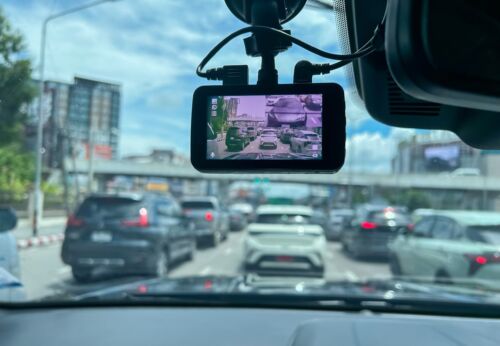
The moments before a car crash can be chaotic: a sudden lane change, a driver who runs a red light, or a distracted driver looking down at their phone are all potential causes. Traditionally, what followed was a frustrating exercise in which each driver presented their side of the story, with no clear way to determine the truth. Insurance adjusters would sort through conflicting accounts, and injured people ultimately relied on juries to evaluate witness testimony to determine who caused the accident. Dashcams have fundamentally changed that equation.
Unlike eyewitnesses, who may be inaccurate in recalling the details of a car accident, dashcams do not have memory limitations and simply replay footage of the accident. Dashcam footage can help determine who caused a car accident. For individuals who were injured in a car accident and liability is in dispute, dashcam footage can be a valuable tool to prove the other driver was at fault.
What Is Dashcam Footage?
Once a rarity or used only by police officers, dashcams have become increasingly popular as a way for drivers to protect themselves. Dashcam footage can provide a valuable visual account of what happened in the moments leading up to a car accident that can be used to establish who was at fault.
A dashcam is a small, portable camera mounted on a vehicle dashboard that captures video (and sometimes audio) of events on the road. Different types of dashcams can be installed, including single-channel dashcams that record only from the front of the vehicle, and dual-channel dashcams that record from the front and the rear. A 360-degree dashcam provides a complete view of the area around the vehicle, while a rear-view dashcam captures footage only from the area behind the vehicle.
How Can Dashcam Footage Be Used in a Car Accident Case?
Dashcam footage can be a source of valuable evidence to establish what happened in the moments leading up to a car crash, and to prove who was at fault. A dashcam provides unbiased footage that can be used to support an injured person’s claim. It can resolve discrepancies between witness testimony and counter false narratives from other drivers. Dashcam footage can also document critical details about the collision, including the date, time, location, and weather conditions at the time of the accident. Dashcam footage can also be used to show:
- The severity of the impact
- A driver’s actions in the moments before the crash
- That a driver was speeding, driving recklessly, or committed a traffic violation
- The identity of the other driver
- Road conditions that contributed to the crash
Limitations of Using Dashcam Footage in a Car Accident Case
While dashcam footage is compelling evidence, it does have limitations. For example, it could show that you were partially at fault for causing the accident. You could also be legally obligated to preserve and provide dashcam footage of an accident you were not involved in. In addition, depending on the type of dashcam you have, it might only record what was happening in front of or behind your vehicle. This evidence might not be helpful in a sideswipe or T-bone accident. Finally, dashcam footage is only as good as the quality of the recording. If the camera’s footage is unclear or affected by inclement weather, it may not be as effective.
Is Dashcam Footage Legal?
Dashcam footage is generally admissible in Michigan courts; however, additional evidence may be required before it is admitted. It must be relevant, authentic (not altered or tampered with), and the source of the dashcam footage must be properly identified.
There are relatively few concerns about the legality of dashcam footage that primarily captures public spaces where individuals do not have a reasonable expectation of privacy. However, drivers should be mindful to avoid recording conversations inside the vehicle without the consent of the individuals being recorded.
How to Use Dashcam Footage in Your Personal Injury Case
If you have dashcam footage you believe would be helpful in your car accident case, you should:
- Preserve the dashcam footage. Save and back up the video as soon as possible. Copy and save the files to a computer and back up to an external storage device, but do not delete the video from the dashcam’s SD card just yet.
- Do not edit or tamper with the dashcam footage. Provide the raw, unedited footage to your attorney. Using edited dashcam footage could harm your case.
- Provide your attorney with context for the video. Include information like the date and time, what direction you were traveling, and the timeline of the events leading up to the crash.
Contact a Personal Injury Attorney at Muth Law, P.C., Today
If you were injured in a car accident, you might be entitled to compensation for your injuries and other losses. The personal injury lawyers at Muth Law have decades of experience representing injured people and families throughout Michigan.
Muth Law is located in Ann Arbor and represents clients in Ypsilanti, Ann Arbor, Washtenaw County, and throughout Michigan. Please contact us to schedule a free, confidential consultation to discuss your truck accident injury matter. Call 734-481-8800 or contact us via e-mail. We look forward to serving your family.
Categories: Auto Accidents