

Menu
How Jury Selection Works in Personal Injury Trials

 Share
Share
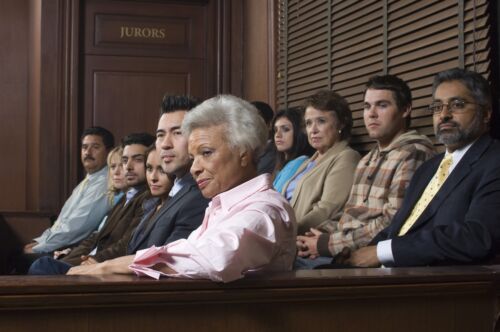
Many trial lawyers consider jury selection the most important part of a trial. A sympathetic jury can increase the likelihood of a successful result, while the wrong jury can make a strong case more difficult to win.
Jury selection in a personal injury trial is part art and part science. Countless books have been written about how to select a jury, and jury consultants are available for hire. The strategy your lawyer will use for selecting a jury in your personal injury case will depend on the unique facts of your situation.
While jury selection may not have the drama of a withering cross-examination or the emotional resonance of a summation, it is an important procedural step that is crucial to success in your case. Knowing how a jury is selected in a personal injury case can help you understand why choosing a jury is important, strategies your attorney may use to select a jury, and prepare you for what will happen.
Why Jury Selection Matters in a Personal Injury Trial
In a personal injury trial, jurors are asked to evaluate evidence, determine liability, decide whether to award compensation to the injured person, and, if so, how much.
Everyone arrives at court with their own beliefs, experiences, and opinions. The goal of jury selection is to protect the fairness and integrity of the legal process by identifying those ideas so the jury is made up of impartial individuals who can fairly and objectively evaluate the evidence and reach a decision.
Where Jurors Come From
In a Michigan personal injury trial, the jury consists of six jurors, plus alternates, who are chosen at random from the Michigan Secretary of State’s records, which include registered voters, licensed drivers, and holders of state identification cards within the court’s jurisdiction.
Voir Dire: “To Speak the Truth”
By the time your case gets to trial, it will have moved through the pleading stages, the attorneys will have exchanged discovery, depositions will have been taken, and the judge will have encouraged the parties to engage in settlement negotiations. On the day of trial, the lawyers will have met with the judge in chambers, and prospective jurors will enter the courtroom.
Voir dire is the process by which attorneys question prospective jurors. The phrase is Latin and means “to speak the truth.” It is the only opportunity the attorneys have to interact directly with the prospective jurors. A good voir dire should be a conversation, not a cross-examination, as the lawyers ask questions to learn about each prospective juror’s background, beliefs, and life experiences and how they could affect an individual juror’s view of the case.
Removing Jurors “For Cause”
When a juror acknowledges they have a bias or cannot follow the law, an attorney can ask the judge to excuse the juror “for cause.” A juror might be dismissed for cause if:
- They cannot be fair and impartial
- They have a close relationship with one of the parties
- They are unable to follow the law or the judge’s instructions
There is no limit to the number of cause challenges.
Peremptory Challenges
In addition to challenges for cause, attorneys also have a limited number of peremptory challenges they can use to dismiss a juror without stating a reason. While attorneys cannot excuse jurors for discriminatory reasons, like race or gender, they can excuse jurors whose answers suggest a bias that is not favorable to their client’s case.
Strategic Considerations
The process of jury selection in a personal injury trial is less about picking the “right” jury than it is about removing jurors who cannot be fair. Lawyers ask questions to help determine whether an individual juror can evaluate the case impartially or may be biased. During jury selection in a personal injury trial, a plaintiff’s attorney may ask:
- Have you or someone close to you ever been seriously injured in an accident?
- Have you ever been a party in a lawsuit?
- Do you have friends or family members who work in the insurance industry or legal field?
- Do you believe there are too many lawsuits filed in this country?
- Do you ever think people exaggerate their symptoms to try to get more money?
- How do you feel about awarding money damages for pain and suffering?
These questions are designed to identify jurors who might be biased against an injured person.
Introducing Legal Concepts
Lawyers also use jury selection to introduce legal concepts and make sure jurors understand the rules of the courtroom and the burden of proof.
In a civil trial, the burden of proof is based on what the evidence is more likely to show. Many jurors enter a courtroom believing they must be absolutely sure. A juror who says they could not return a verdict for the plaintiff unless they were “absolutely sure” might not be a good fit for a civil trial.
The Jury’s Role During Trial
Once the attorneys are satisfied with the jury and any alternates, the jurors are sworn in, and the trial officially begins. Jurors will listen to:
- Opening statements from both sides
- Testimony from fact and expert witnesses
- Closing arguments from each side
At the close of the trial, the jury will be asked to determine liability, causation, the extent of the person’s injuries, and an amount of money that will fairly compensate them.
The Importance of Jury Selection in a Personal Injury Trial
Jury selection determines who will be on the jury and sets the tone for how a case is presented. It is a vital part of a personal injury trial and helps ensure a fair and impartial jury.
The personal injury trial attorneys at Muth Law, P.C., have decades of experience representing clients in trials throughout Michigan. We work with clients in Ypsilanti, Ann Arbor, Washtenaw County, and throughout Michigan.
Contact Muth Law Today
Please contact us to schedule a free, confidential consultation to discuss your automobile accident injury matter. Call 734-481-8800 or contact us via e-mail. We look forward to serving your family.
Categories: Personal Injury
