

Menu
Liability in Accidents with Emergency Vehicles

 Share
Share
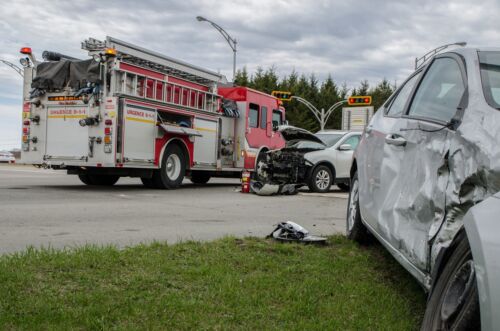
We rely on emergency vehicles like police cars, firetrucks, and ambulances to reach us quickly when we need help. The law grants these vehicles special privileges when they are responding to a call. They can exceed the posted speed limit, ignore stop signs and traffic lights, and drive on the shoulder or the wrong side of the road. When drivers see the lights and hear the sirens of an emergency vehicle, they are expected to move to the side of the road and reduce speed so the emergency vehicle can pass by.
Despite these privileges, drivers of emergency vehicles are expected to follow applicable laws to safely respond to an emergency. When drivers of emergency vehicles disregard the law and needlessly endanger others on the road, they can and should be held responsible for the harm they cause.
Understanding Immunity in Accidents Involving Emergency Vehicles
Because of the importance of their work and the fact that delay could lead to more severe injuries or loss of life, emergency vehicles are exempt from certain traffic laws, as long as certain conditions are met. Michigan law grants limited immunity to drivers of emergency vehicles who are responding to an emergency. In these situations, drivers of emergency vehicles are authorized to:
- Park or stand, irrespective of this act
- Proceed past a red light or stop sign, but only after slowing down as necessary for safe operation
- Exceed the posted speed limit, so long as doing so does not endanger life or property
- Disregard laws that govern the direction of movement or turning in a specified direction
These exemptions apply to authorized emergency vehicles when the vehicle is in motion and the driver of the vehicle sounds an audible signal and displays flashing lights. Police vehicles retain these exemptions without sounding an audible signal if the vehicle is engaged in an emergency run in which silence is required.
Proving Liability for an Accident Involving an Emergency Vehicle
While drivers of emergency vehicles are granted certain privileges when responding to an emergency, these privileges are not absolute. Emergency vehicle drivers must exercise due care and take precautions to avoid accidents.
If you were injured in an accident involving an emergency vehicle, do not simply assume your claim is barred because the driver who hit you was operating an emergency vehicle. Drivers of emergency vehicles can still be held liable if they were driving recklessly, were not responding to an emergency, or failed to follow the rules for drivers of emergency vehicles. However, analyzing the actions of an emergency vehicle driver can be complicated and determining whether they were negligent or reckless is highly fact-specific.
If the driver who hit you was not responding to an emergency, limited immunity would not apply and your claim would proceed like any other claim for personal injuries. Although you may be filing a claim against a city or a police department, your claim will proceed largely like any other personal injury claim.
If it is determined that the emergency vehicle driver followed proper procedures and exercised reasonable care, other parties may still be liable, such as another driver who failed to yield the right of way or a pedestrian who disregarded traffic signals.
Common Causes of Accidents Involving Emergency Vehicles
Various factors can cause collisions involving emergency vehicles, such as:
- Excessive Speed. Emergency vehicles often travel at high speeds to reach their destinations quickly; however, these high speeds increase the risk of the driver losing control or colliding with other vehicles or pedestrians.
- Disregarding Traffic Signals. Even though emergency vehicles are authorized to proceed through intersections controlled by a red light or a stop sign, these actions can cause a collision if other drivers fail to yield.
- Driver Fatigue. Emergency responders work long, demanding shifts, which can lead to driver fatigue, inattention, and poor decision-making, all of which can cause a collision.
- Distracted Driving. Emergency responders who are distracted by communication devices, navigation systems, or other in-vehicle equipment are more likely to be involved in an accident.
- Poor Visibility. Rain, fog, and snow can reduce visibility and make it more challenging for emergency vehicle drivers to navigate safely.
- Poor Vehicle Maintenance. Mechanical failures or inadequate maintenance can contribute to accidents.
How the Personal Injury Lawyers at Muth Law, P.C., Can Help
Determining liability for an accident involving an emergency vehicle can be challenging, and various factors may apply. If the emergency vehicle driver’s actions were deemed reckless or in violation of established protocols, the emergency vehicle driver or their employer can be held liable. Even if the emergency vehicle driver followed procedure and acted with due care, other parties may be liable.
If you were injured in an accident involving an emergency vehicle, we recommend contacting our office as soon as possible. Our personal injury lawyers can review your circumstances to determine whether you have a viable claim for damages.
Contact a Personal Injury Attorney at Muth Law, P.C., Today
The personal injury lawyers at Muth Law have decades of experience representing injured people and families throughout Michigan. Our office is located in Ann Arbor and we represent clients in Ypsilanti, Ann Arbor, Washtenaw County, and throughout Michigan. Please contact us to schedule a free, confidential consultation to discuss your truck accident injury matter. Call 734-481-8800 or contact us via e-mail. We look forward to serving your family.
Categories: Auto Accidents