

Menu
Cyberbullying vs. Platform Liability: Who's Actually Responsible for Your Child's Harm?

 Share
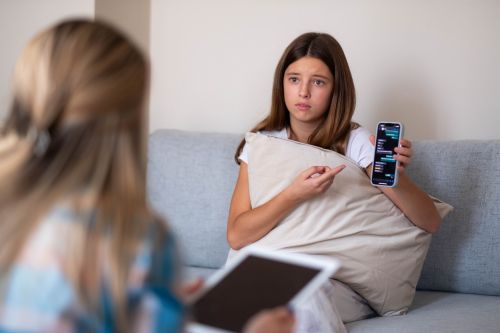
The harm caused by cyberbullying is real. Victims may experience anxiety or depression, withdrawal from social activities, or declining performance at school. Families trying to identify who is responsible for the bullying and who allowed it to happen should understand potential theories of liability in this rapidly evolving area of the law. Depending on the facts of the case, you may be entitled to file a cyberbullying lawsuit in Michigan.
Key Takeaways:
- The child directly responsible for cyberbullying can be held liable for intentional infliction of emotional distress, defamation, or harassment. However, collecting on a judgment against a minor can be difficult.
- The bullying child’s parents can be held liable under MCL 600.2913, but financial recovery is capped at $2,500. The parents may also be liable for an uncapped amount if they knew about the bullying but failed to intervene.
- A social media platform generally cannot be held liable for failing to remove or moderate harmful content because the platform is treated as a publisher of someone else’s content.
- An emerging theory of liability targets the platform’s design choices rather than the bullying content itself.
- Michigan’s criminal cyberbullying statute, MCL 750.411x, does not create a civil claim, but a criminal violation may be helpful as evidence of wrongdoing.
The Bullying Child Is Usually the Directly Liable Party
The child who was directly responsible for writing, posting, sharing, or sending the harmful conduct can be held liable for the harm they caused. Michigan law does not shield a minor from civil liability for intentional conduct. Based on the facts, the harmed party may be eligible to file a cyberbullying lawsuit in Michigan.
The most common theories of liability used to hold someone liable in a cyberbullying lawsuit in MIchigan include intentional infliction of emotional distress, defamation (if the bullying involved false statements presented as fact), invasion of privacy (if private images were shared with out consent), or a civil stalking claim under MCL 600.2954 (based on conduct prohibited under MCL 750.411h or 750.411i) which allows a victim to recover monetary damages, exemplary damages, costs, and attorney fees, regardless of whether the conduct was charged as a crime.
Under Michigan’s cyberbullying statute, MCL 750.411x, certain threatening conduct made online is illegal. Although the statute does not directly create a claim for civil liability, Klanseck v. Anderson Sales & Service, Inc. establishes that violation of a safety statute creates a rebuttable presumption of negligence. Under this theory, a violation of the criminal statute can support a civil claim for negligence or an intentional tort claim.
Nonetheless, even with a clear legal theory or liability, collecting on a judgment against a minor with no income or assets can be difficult.
A Bullying Child’s Parents Can Be Liable, But Michigan Caps One Path Sharply
Two theories of liability can be used to hold the parents of the bullying child responsible in a cyberbullying lawsuit in Michigan.Michigan statute 600.2913 allows for a civil claim against the parents of an unemancipated minor living with them for the minor’s malicious or willful conduct that causes harm or injury. Recovery under this theory is capped at $2,500, regardless of how serious the harm.
In addition, the bullied child can pursue a claim against the parents of the bullying child if they knew their child was engaging in cyberbullying but did nothing to stop it. This claim focuses on the negligence of the bullying child parents, not the child’s conduct, so the $2,500 cap does not apply. This claim requires proof that the parents knew of the bullying child’s conduct but failed to intervene to stop it.
Suing the Platform for Hosting the Bullying Content Almost Never Works
Under Section 230(c)(1) of the Communications Decency Act, interactive computer services are immune from liability for publishing third-party content. In practice, this means a platform cannot be sued for failing to remove or for hosting bullying content, because that claim would treat the platform as responsible for someone else’s content.
Even if the platform displayed the bullying content and was slow to respond to a report, Section 230 was written specifically to prevent claims based on third-party content, regardless of how harmful it was. While Section 230 includes exceptions for federal crimes, intellectual property, and sex trafficking, the statute does little to help establish liability for cyberbullying.
A New, Narrower Theory Is Starting to Work: Suing the Platform Over Its Own Design
Courts have begun recognizing claims that circumvent Section 230 by targeting a platform’s design choices. In Lemmon v. Snap, Inc., the U.S. Court of Appeals for the Ninth Circuit allowed a lawsuit to proceed against Snapchat over its “Speed Filter,” which was designed to encourage users to engage in dangerous behavior. The Massachusetts Supreme Judicial Court applied similar reasoning in Commonwealth v. Meta Platforms, Inc., allowing claims to proceed against Meta and its subsidiary Instagram for design features that were built to be addictive.
This theory targets specific design features that were built to be addictive or encourage dangerous behavior, rather than the platform’s failure to remove the bullying content itself. This is a new theory that is still being tested, and it does not turn a cyberbullying case into a design-defect claim just because the conduct occurred on a major online platform.
Work With a Michigan Attorney Who Knows Which Path Actually Applies
Cyberbullying can cause serious harm, particularly to teens and young people. Most cases of cyberbullying involve multiple parties who share responsibility. The strongest claims are against the bully and, in some cases, their parents, rather than the platform. Through our social media injury practice, Muth Law, P.C., tracks this evolving area of the law and can evaluate the theories of liability available to your family to file a cyberbullying lawsuit in MIchigan.
Muth Law represents clients in Ypsilanti, Ann Arbor, Washtenaw County, and throughout Michigan. You will never pay us an attorney fee until we recover money for you. Call 734-481-8800 or contact us via e-mail to schedule a free and confidential appointment to discuss your situation and how we can assist you. We look forward to helping you and your family.
Categories: Social Media
